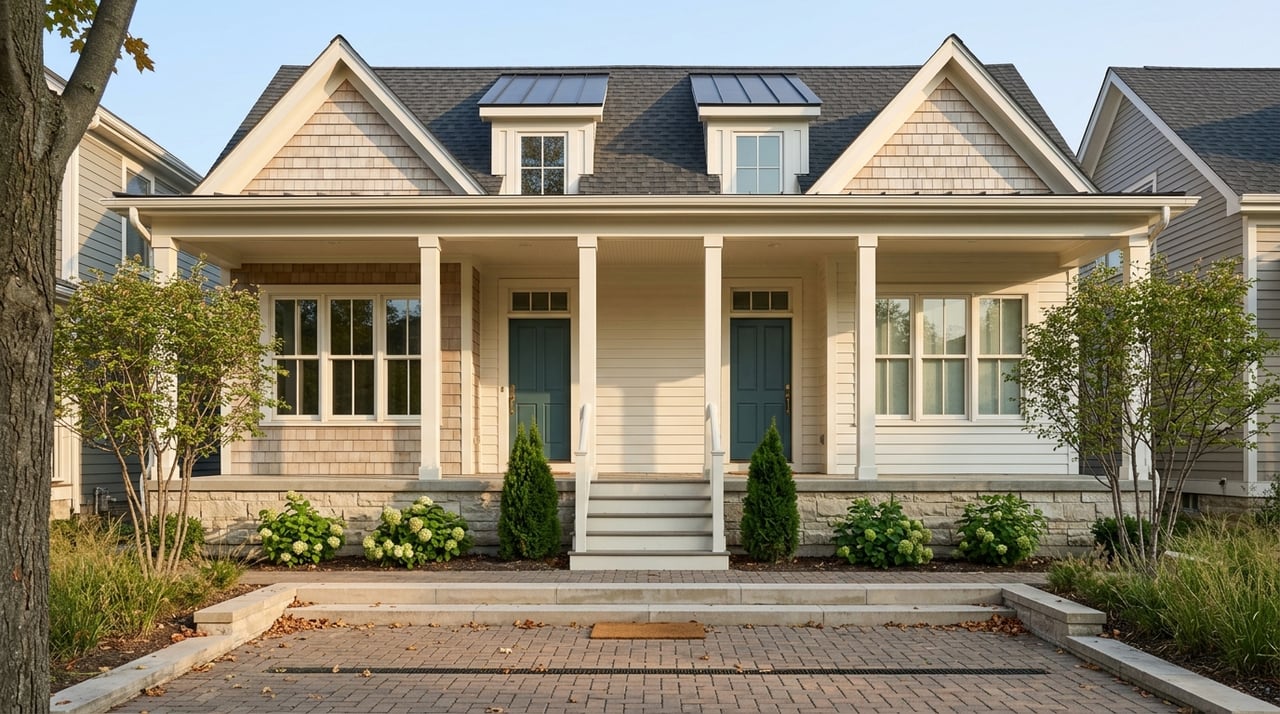
Positioning Boutique Developments In The Petoskey Market
June 18, 2026
June 18, 2026
What makes a boutique development succeed in Petoskey? It is not just price, finishes, or a good rendering. In a small, character-driven market with strong seasonal demand and limited year-round supply, the projects that stand out are the ones that feel deeply connected to how people actually want to live here. If you are evaluating a new residential project, this guide will help you think through unit mix, pricing, design, and market fit in a way that is grounded in Petoskey’s realities. Let’s dive in.
Petoskey is a compact market, with 5,810 residents and 2,648 households as of 2024. It also skews older, with 23.2% of residents age 65 and up, which matters when you think about home design, maintenance preferences, and downsizing demand.
That small scale can be deceiving. Petoskey sits inside a four-season resort region shaped by boating, golf, skiing, trails, dining, and shopping, and the Gaslight District alone includes about 90 specialty shops. That means buyer demand is influenced by both full-time living and second-home lifestyle goals.
One of the biggest mistakes in a market like Petoskey is treating housing demand as broad and uniform. It is not. Housing North’s 2023 assessment estimated a five-year gap of 273 rental units and 340 for-sale units in Petoskey, with even larger gaps across Emmet County.
At the same time, that demand is concentrated in certain price ranges and household types. The largest local for-sale gap sits in the $221,868 to $332,800 range, while renter growth is mostly among households earning $50,000 and up, and owner growth is strongest among households earning $60,000 to $99,999.
That tells you something important. A boutique project cannot simply aim at “the Petoskey buyer.” It needs to be built and priced for a very specific slice of the market.
Petoskey can look like it has slack in the housing market if you only glance at vacancy numbers. But that picture is misleading. Housing North found that 90.9% of Petoskey’s vacant units are seasonal or recreational, which means they are not truly available to year-round residents in the way a typical vacancy rate might suggest.
This matters for positioning. A project designed for year-round use can answer a real market need, especially if it offers low-maintenance living, practical storage, and convenient access to everyday amenities and recreation.
In a market this size, unit count matters. Petoskey’s household base is modest, and projected household growth is not broad-based through 2027, with overall household counts expected to decline slightly even as growth concentrates among seniors and households ages 35 to 44.
That is why boutique should actually mean boutique. A limited-unit-count project often makes more sense than a large-scale play, because it can feel scarce, tailored, and easier to absorb without flooding a narrow buyer pool.
A smaller project gives you more control over product mix, pricing, and pacing. It also lets you shape a more curated identity, which matters in a place where design quality and local fit carry real weight.
For many sites, the better question is not how many units you can fit. It is how many units the market can absorb comfortably while still preserving a sense of exclusivity and place.
Petoskey’s existing supply leans upscale. In the housing snapshot, only 10.5% of available homes were priced below $200,000, while nearly half were listed at $400,000 and above. Several larger listings also pushed well into premium pricing because of size and waterfront location.
That creates an opening, but not for an all-or-nothing approach. The strongest boutique developments in Petoskey are likely the ones that balance attainable design with selective premium positioning.
A smart mix may include:
This kind of mix aligns better with local household patterns, buyer needs, and the reality that not every unit has to chase the same audience.
Petoskey’s pricing signals are mixed, which is common in smaller resort markets. Zillow placed Petoskey’s home value index at $473,744 as of May 31, 2026, while Realtor.com reported a median listing price of $948,750 in March 2026, along with a 96% sale-to-list ratio and median days on market of 82. These figures are based on different methodologies, so they should not be treated as direct contradictions.
What they do show is that Petoskey supports premium pricing in the right context, but that does not mean every new product belongs at the top of the market. In fact, the current list-price-to-income relationship suggests that high-priced new construction often depends on affluent second-home buyers, relocating households, and investors more than local wage-based demand.
If you are positioning a boutique project, broad luxury language is not enough. Your pricing needs to match a clearly defined buyer pool, a disciplined unit count, and a product story the site can truly support.
In many cases, lifestyle-first positioning will outperform price-first positioning. Buyers want to understand how the property fits their day-to-day life, not just how expensive it is.
Petoskey is not a generic luxury market. It is a place-based market. People are drawn here for lake access, trails, skiing, golf, dining, shopping, arts, and a small-town resort rhythm that works across seasons.
That is why the strongest branding for boutique development usually skews toward livability first and luxury second. Buyers often respond more to ease, setting, and thoughtful design than to oversized amenity packages or flashy marketing language.
In many boutique projects, the most believable amenity package is simple and useful:
This approach fits the market better than trying to recreate a full resort inside a small residential development.
If a project is in or near downtown, architecture and streetscape matter in a very practical way. Petoskey’s downtown design guidelines emphasize historic character, human scale, and a continuous street presence. They call for buildings to face the main shopping street, maintain zero lot setbacks, and avoid placing parking lots at the street edge.
The guidelines also encourage a roughly 25-foot bay rhythm so larger buildings feel visually broken up and more pedestrian-scaled. For a boutique residential or mixed-use project, that can translate into restrained architecture, hidden parking, and a frontage that feels connected to the street rather than withdrawn from it.
In Petoskey, design is not just aesthetic. It is part of market fit. A project that respects local scale and character is more likely to feel natural to buyers and to the broader community.
That does not mean copying the past. It means building with enough sensitivity that the project feels like it belongs.
The market can support premium product, but it also punishes vagueness. A boutique development needs a clear story about who it is for, how it lives, and why it belongs in this location.
The most compelling projects in Petoskey usually share a few traits:
This is where strategy can create real value. A well-positioned project does not need to be the biggest or flashiest. It needs to be the most coherent.
Petoskey and Emmet County are not blank-slate development environments. Housing North’s RRHF and the Emmet County Housing Ready Program are designed to support small- to medium-sized projects, year-round housing, and developer-community coordination.
Housing North also points to ADUs and a broader mix of rental and for-sale housing as useful tools for serving downsizers, seniors, middle-income households, and multigenerational living. For the right project, that signals a local environment that values practical housing solutions, thoughtful planning, and improved site readiness.
In Petoskey, boutique development works best when it feels intentional. The market is small, design-aware, and shaped by both lifestyle demand and real year-round housing need. That means success usually comes from careful positioning, not broad assumptions.
If you are thinking about how to shape, price, or market a boutique residential project in Petoskey, it helps to look beyond generic luxury cues and focus on what this market actually rewards: fit, restraint, usability, and a strong sense of place. For thoughtful guidance on Northern Michigan real estate and development positioning, connect with Genna Hill.
Stay up to date on the latest real estate trends.
Connect with a real estate professional who values trust, insight, and personal attention. Every step is guided by a deep understanding of what “home” truly means.