Harbor Springs Architectural Styles Buyers Should Know
June 4, 2026
June 4, 2026
If you have ever walked through Harbor Springs and felt that the homes somehow belong exactly where they sit, you are noticing something important. This is a town where architecture has grown from resort history, shoreline living, and careful preservation rather than from one single trend. If you are buying, selling, renovating, or simply trying to understand what gives Harbor Springs homes their appeal, this guide will help you recognize the styles, details, and design choices that shape value and character. Let’s dive in.
Harbor Springs does not read as a one-style town. Its built environment reflects a long history as a resort community, with Victorian cottages, summer houses along the shoreline, shingle-style lake homes, selective newer infill, and farmhouse influences at the edges.
That layered look is part of what makes the area so compelling. The Harbor Springs Library notes the town was incorporated in 1880 and highlights its long-standing connection to summer visitors and returning families. Today, that history still shows up in the scale, materials, and porch-centered rhythm of many homes.
Local zoning also reinforces that identity. Harbor Springs updated its zoning rules effective June 1, 2024, and the city now uses overlay districts and architectural standards to help preserve the visual character of downtown and Bay Street.
For many buyers, the classic Harbor Springs home starts with the cottage. These homes are not always pure examples of one textbook style, but together they create the visual baseline many people associate with the area.
The Harbor Springs Library points to generations returning to Victorian cottages along the shoreline. In practice, that cottage language often includes white clapboard, generous porches, exposed rafter tails, shiplap walls, black-framed windows, and rooftop spaces oriented to the bay.
From a preservation standpoint, Victorian vernacular homes often combine simple forms with more decorative late-19th-century elements. According to National Park Service preservation guidance, those features can include wraparound porches, wood shingles, dormers, bay windows, towers, irregular massing, and steeper rooflines.
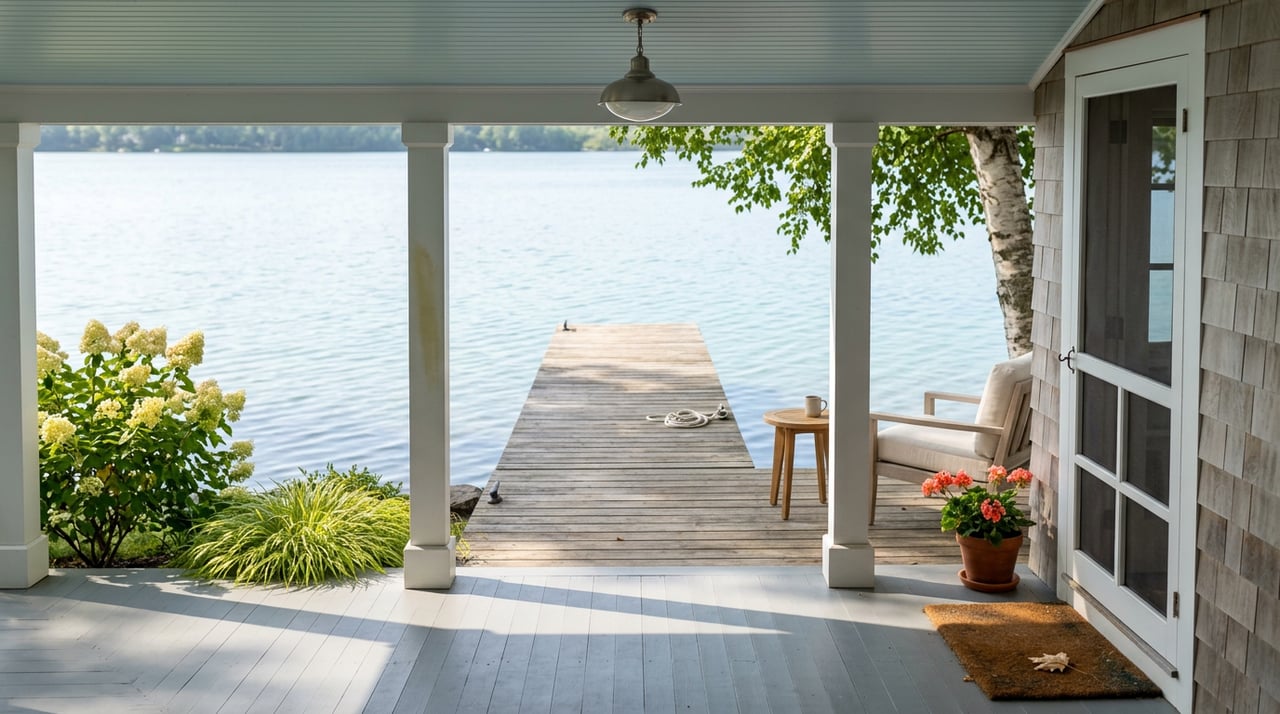
In Harbor Springs, the result is usually less formal and more relaxed. The homes tend to feel compact, porch-oriented, and closely tied to seasonal living, lake views, and easy movement between indoors and out.
Authenticity in Harbor Springs is usually less about freezing a house in time and more about keeping the parts that give it local identity. Exterior rhythm matters. Porch presence matters. Window proportions and the relationship between the house and the street matter.
That is one reason some renovated cottages still feel deeply rooted in place. Even when interiors have been updated for modern living, the homes often keep the visual cues that connect them to Harbor Springs’ older resort-house tradition.
Along the waterfront and in homes influenced by lake living, Shingle Style has lasting appeal. This style works well in Harbor Springs because it feels substantial without feeling formal, and it often sits comfortably within wooded or shoreline settings.
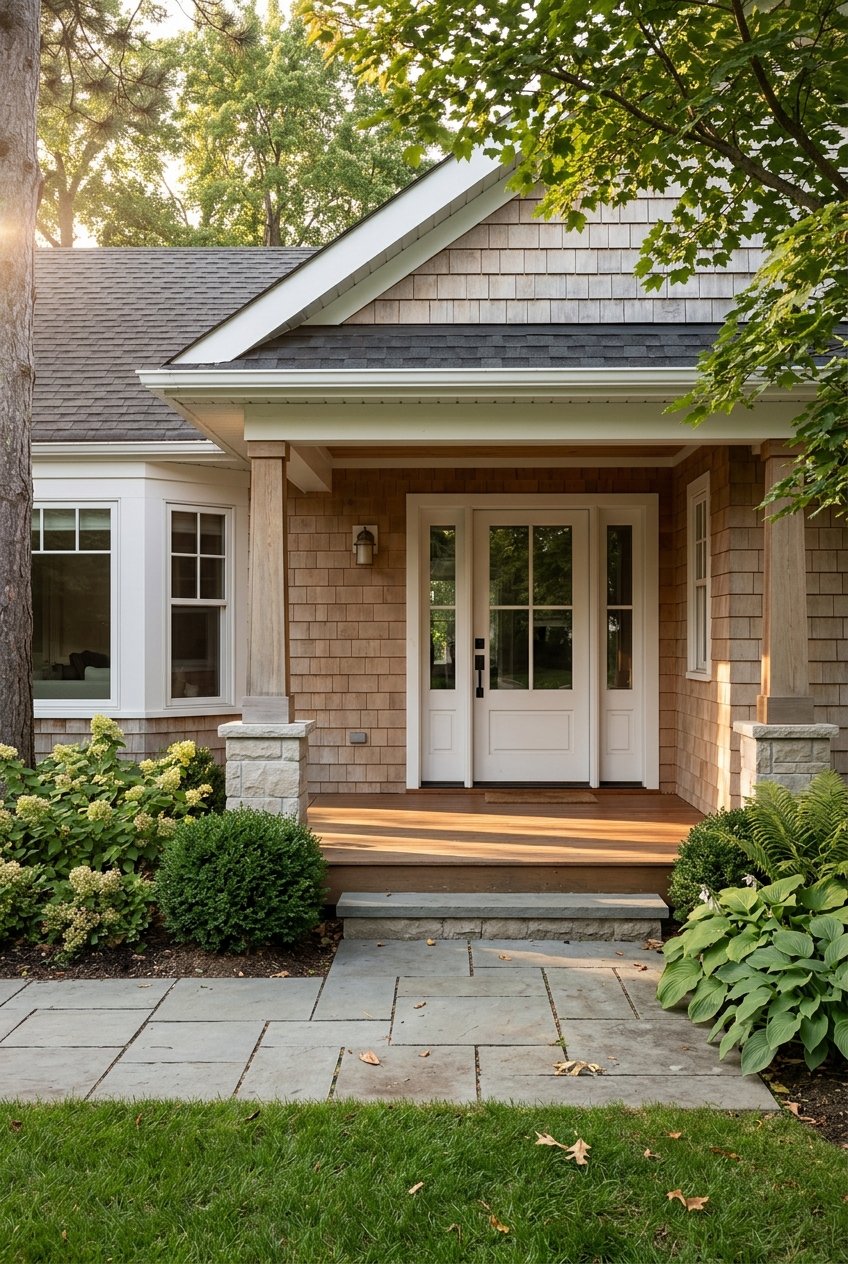
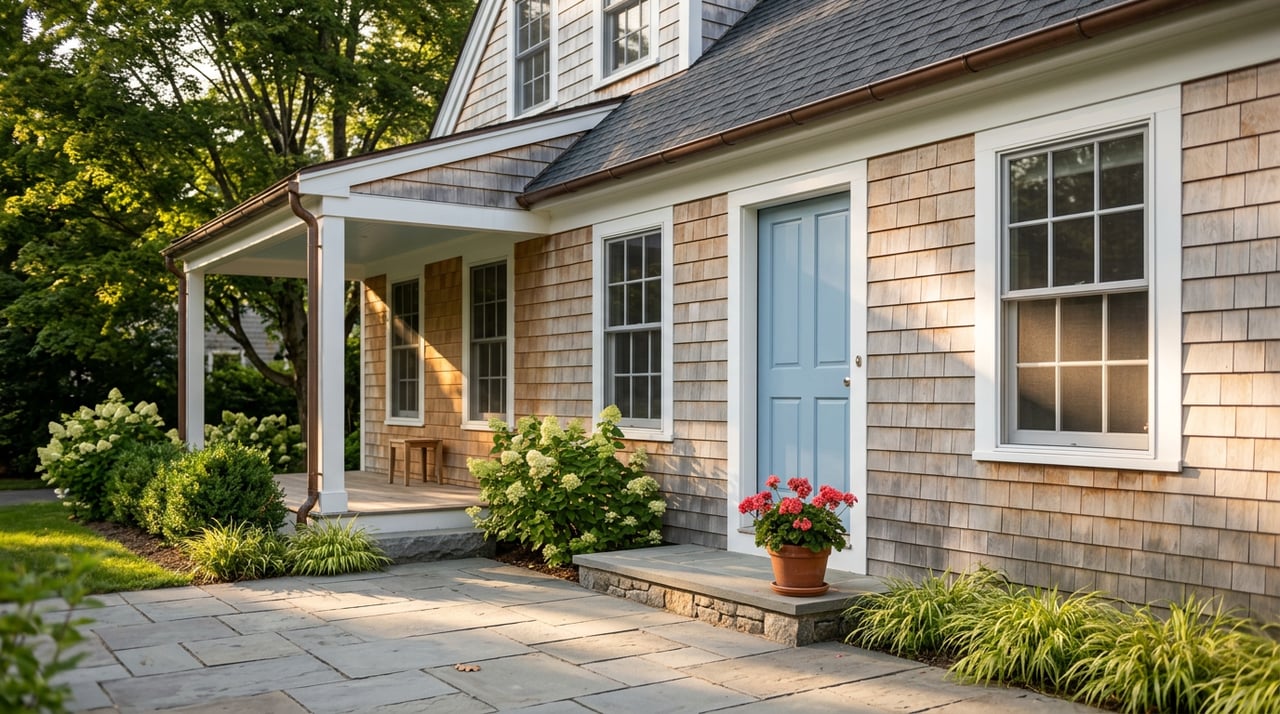
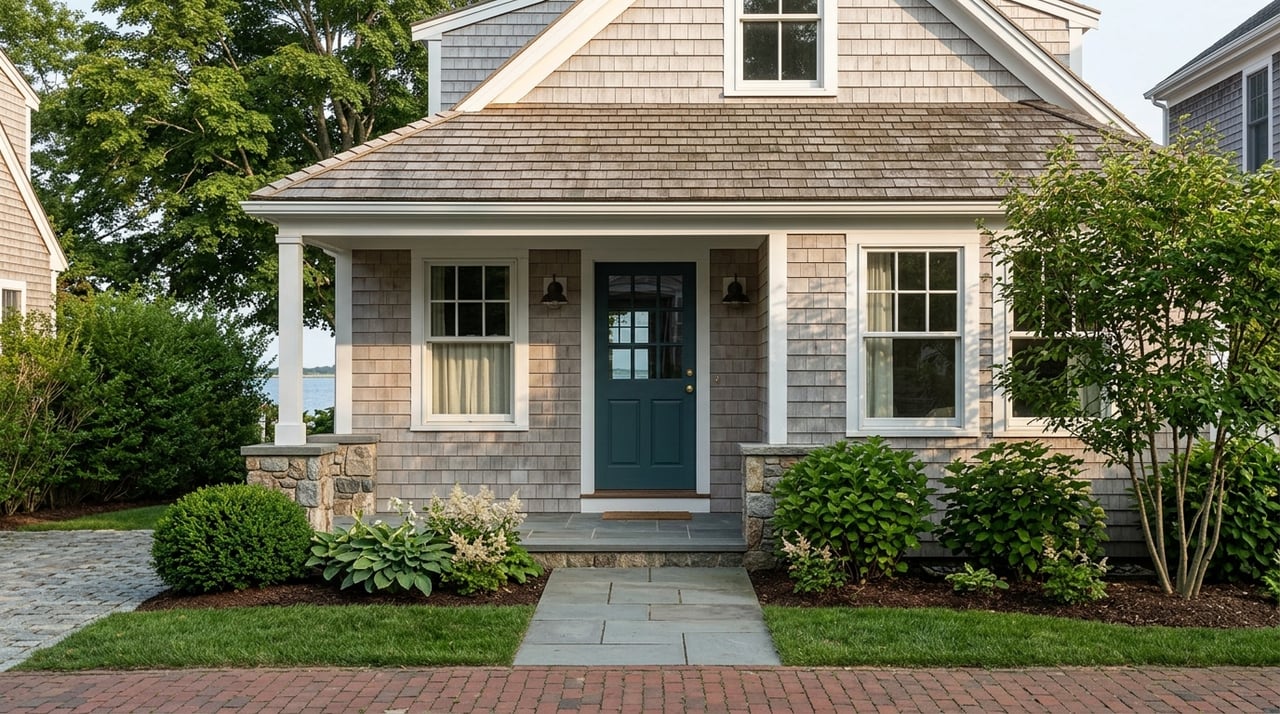
National Park Service guidance describes Shingle Style homes as having complex roofs, asymmetrical massing, broad porches, dormers, curved bays, and extensive shingle cladding. In Harbor Springs, local examples often add natural stone foundations, cedar siding, and shake roofs that help the house settle visually into the landscape.
This style tends to support the lifestyle many second-home buyers want. It offers a relaxed but refined look, generous gathering spaces, and a strong connection to the outdoors.
Shingle-style homes often feel appropriate over time because they respond to setting first. Their materials weather naturally, their massing can handle sloped or wooded sites, and their porches create useful outdoor living space without overpowering the lot.
For buyers and sellers, that matters. Homes that feel integrated with the site often hold stronger emotional appeal, and in a place like Harbor Springs, emotional appeal and design coherence can influence how a property is perceived in the market.
Harbor Springs is not stuck in the past. New construction and newer redevelopment are part of the story too, but the strongest examples usually take cues from the town’s established architectural vocabulary.
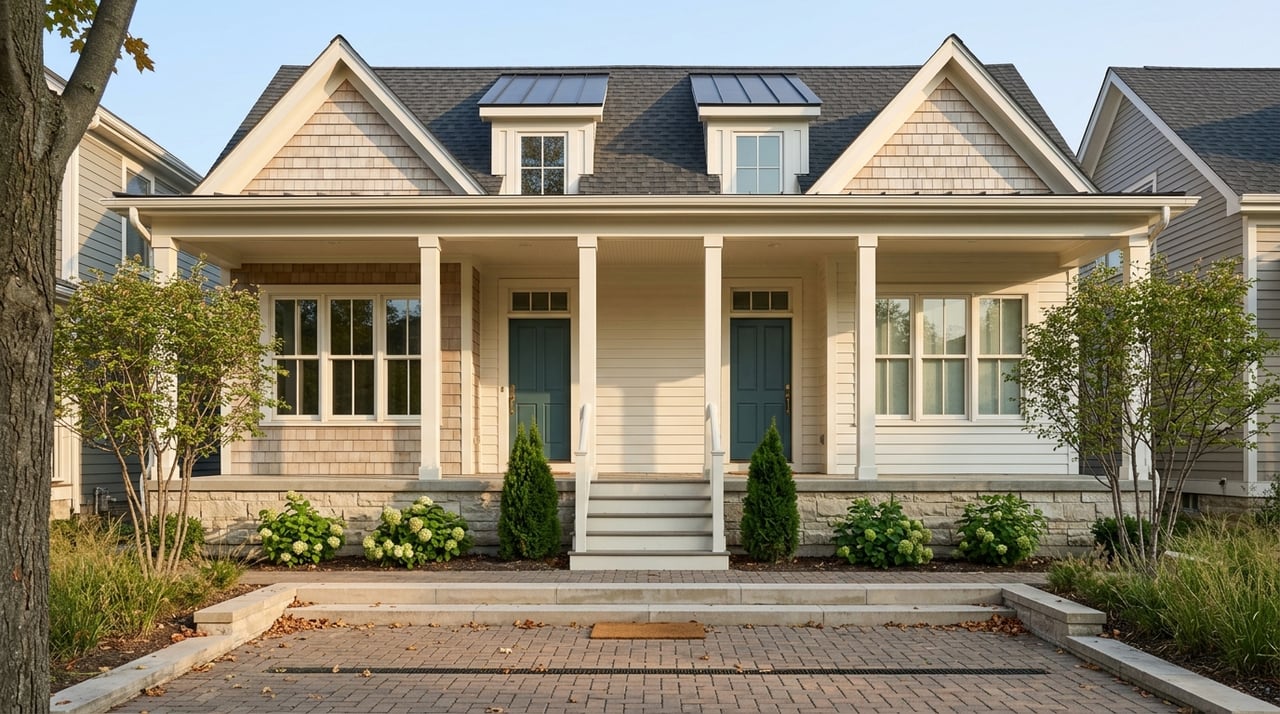
A clear example is Bay Street Cottages, completed in 2004 on a site that had previously contained a motel and public beach. SAH Archipedia describes the 18 freestanding condominium homes as a New Urbanism project, with cottage exteriors inspired by northern Michigan resort homes through details like front porches and dormers.
That project helps explain why some newer properties feel accepted quickly. They reflect familiar scale, roof forms, materials, and porch life, even when the homes themselves are newly built.
In Harbor Springs, new homes tend to succeed when they respect local massing and rhythm. That often means narrower visual width, articulated facades, consistent window patterns, and an exterior that feels connected to nearby homes rather than imported from somewhere else.
Local design coverage also supports this idea. Architects working in Harbor Springs have noted that while old compartmentalized floor plans may not suit how people live today, homes can still preserve a traditional exterior character while offering open great rooms, better circulation, and a more modern interior experience.
Not every important home in the Harbor Springs area follows cottage tradition. The Douglas House, completed in 1973 by Richard Meier on a steep wooded Lake Michigan site near Harbor Springs, stands out as the area’s best-known modernist counterpoint.
Its presence shows that Harbor Springs architecture has room for contrast. But it also highlights an important point: exceptional design still responds to site, scale, and setting. Even a very modern home feels more successful here when it engages with the landscape in a thoughtful way.
For buyers considering newer or more contemporary homes, that distinction matters. The question is rarely whether a home is old or new. It is whether the design feels intentional, well-sited, and compatible with the character of the area.
Beyond the shoreline and village core, farmhouse character helps define parts of the broader Harbor Springs and Emmet County market. Here, farmhouse style is usually less about ornament and more about practicality, land use, and siting.
Harbor Springs’ Agricultural Overlay District recognizes active agricultural uses within the city, including orchards, vineyards, greenhouses, market gardening, nurseries, and farm operations. That context supports a more grounded, working-land version of home character.
In simple terms, farmhouse appeal here often comes from the relationship between the house, the land, and daily use. The visual impact may be quieter, but it still carries a strong sense of place.
In Harbor Springs, value is rarely tied to age alone. A very old home that has lost its defining features may feel less compelling than a thoughtfully updated property that keeps its exterior character intact.
National Park Service preservation guidance distinguishes between preservation, rehabilitation, restoration, and reconstruction. For most homeowners and buyers, the practical takeaway is that renovation choices matter most when they protect what gives a home its identity while improving how it lives today.
That idea shows up clearly in the local market. Homes often resonate most when they feel as if they belong to the neighborhood and have evolved naturally over time, rather than reading like generic new construction.
If you are evaluating a Harbor Springs home, these exterior elements often carry outsized importance:
Inside, buyers often appreciate updates that support modern living. Open gathering areas, better circulation, and improved functionality can add a lot, especially when the exterior still feels rooted in local tradition.
If you are buying in Harbor Springs, it helps to look beyond broad labels like cottage, farmhouse, or contemporary. The better question is how well the home expresses local character and whether its updates support the way you want to live.
If you are selling, architectural clarity can become part of your property’s positioning. A home with recognizable local cues, a strong sense of place, and thoughtful updates is often easier for buyers to understand and remember.
This is where design fluency matters. In a market shaped by history, waterfront settings, and second-home expectations, the details that feel subtle at first glance can have a meaningful impact on appeal.
Harbor Springs homes stand out because they balance heritage and livability so well. Whether your eye is drawn to a Victorian cottage, a shingle-style lake house, a farmhouse on the rural edge, or a carefully designed newer home, the common thread is thoughtful connection to place.
If you are thinking about buying, selling, or evaluating a property in Harbor Springs, working with someone who understands both architecture and market positioning can help you see value more clearly. To talk through a home, a renovation angle, or what buyers are responding to right now, connect with Genna Hill.
Stay up to date on the latest real estate trends.
Connect with a real estate professional who values trust, insight, and personal attention. Every step is guided by a deep understanding of what “home” truly means.